
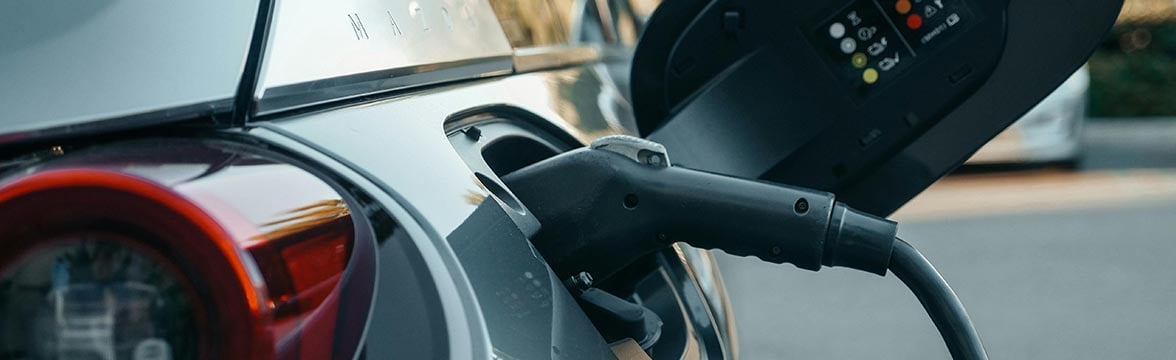
With the UAE targeting net zero by 2050 and EV adoption growing year-on-year, demand is beginning to surface not just for greener mobility, but for the infrastructure required to support it. From charging logistics and battery storage to aftersales servicing and component handling, new layers of industrial activity are taking shape.
Industrial Take-Up May Be Entering a New Phase
As of 2024, EVs accounted for 11% of all new car sales in Dubai — a 150% increase on the previous year — underscoring just how fast adoption is accelerating. The implications for industrial real estate are broad and still unfolding. At a national level, momentum is being driven by policy: in 2023, the UAE’s Ministry of Energy and Infrastructure launched the ‘Global EV Market’ project, aiming to position the country as a global hub for electric vehicles and boost EVs to 50% of total vehicles on UAE roads by 2050.
Auto sector tenants may increasingly look beyond pure warehousing, showing early signs of interest in high-spec, multi-use facilities that could accommodate storage, servicing, assembly, and smart charging infrastructure. These evolving requirements could begin to shift demand toward more advanced assets, potentially those offering higher power capacity, flexible layouts, or future-ready infrastructure such as enhanced ventilation or fire safety systems.
Dubai South, Dubai Industrial City and National Industries Park are among the key submarkets positioned to capture this interest. Projects like Aldar’s upcoming 1.55 million sq ft logistics park and the Arabian Automobile Company’s 350,000 sq ft distribution facility reflect early activity aligned with automotive and logistics growth. Land acquisition activity in Dubai South and Dubai Industrial City also signals investor confidence in the longer-term potential of these corridors.
Infrastructure Is Expanding to Support EV Growth
Dubai is scaling its physical infrastructure in step with EV adoption. More than 700 EV charging stations are now operational, with coverage expanding into commercial and industrial areas. This growing backbone of support infrastructure signals public-sector commitment to enabling EV growth, not only on the roads but across the broader supply chain ecosystem.
Meanwhile, industrial developers and occupiers alike are watching the evolving market closely. As new technologies and operating models continue to emerge, flexibility - in power usage, layout, and licensing - may become a central differentiator for industrial assets aiming to attract the next generation of tenants.
A Watchpoint for Developers and Investors
The occupier profile is beginning to diversify. It’s no longer just car brands and traditional distributors; there are early indicators that other providers - software providers, parts suppliers, and battery-related firms - may also play a role in future demand.
Overall, the growing use of Electric Vehicles and the various manufacturing and logistics requirements associated with them, is likely to create new pressure on masterplans to deliver flexible, scalable space with robust infrastructure and strong connectivity.
Dubai’s industrial sector is no stranger to transformation. But the EV transition brings a fresh set of requirements, and a fresh set of opportunities. For developers and landlords, the challenge will be building for a future that is still coming into focus, while ensuring today’s assets remain relevant tomorrow.