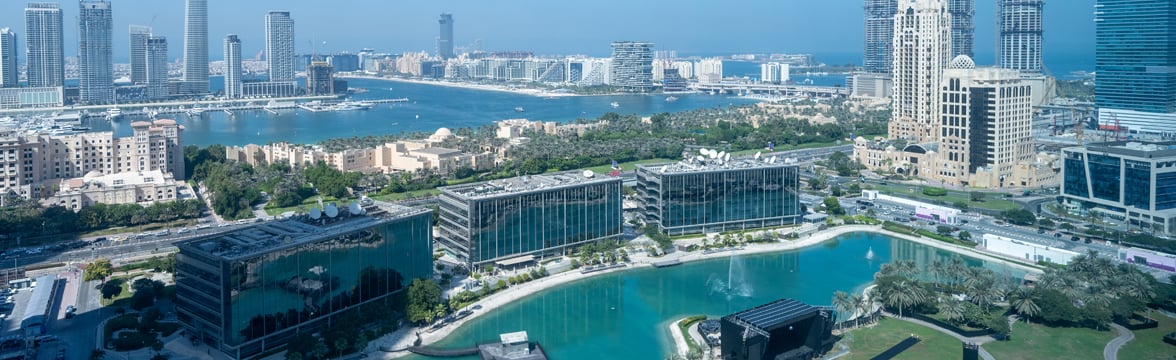
Within Dubai, the success of sector-specific clusters such as Dubai Internet City (DIC), Dubai International Financial Centre (DIFC), and Dubai Media City, is testament to the efficacy of this approach, exemplifying how deliberate clustering can transform an area into a thriving business hub.
The numbers reflect the impact. A recent impact assessment revealed that DIC alone has contributed AED 100 billion to Dubai's GDP over the past 15 years, accounting for 65% of the Emirate's technology sector GDP. More than 125,000 direct and indirect jobs have been generated, and the combination of industry giants alongside startups has cultivated a dynamic environment that attracts and retains top-tier professionals, helping Dubai become the premier technology hub in the Middle East.
The benefits of clustering in DIC are clear. By housing over 4,000 companies, including many of the tech focused Fortune 500 companies such as Google, Oracle and SAP and more than 31,000 professionals within a concentrated area, DIC has created a network effect that encourages collaboration, innovation, and efficiency. Businesses want to be where their peers and partners are, and that drives demand, resulting in premium lease rates and increasing property values.
Yet, sustainable cluster success requires more than just commercial demand, it needs a broader ecosystem that supports business, talent, and community. A key but often overlooked factor in cluster development is the integration of mixed-use support assets.
The most successful clusters evolve beyond single-use business hubs into vibrant environments where residential, hospitality, retail, and leisure components create a self-sustaining ecosystem. A well-designed mix of residential options, strategic retail, and F&B offerings tailored to the workforce demographic can boost tenant retention and foster collaboration beyond office hours. Focusing on a holistic approach to ecosystem development reinforces a cluster’s competitive advantage in attracting top-tier talent and long-term investment.
Of course, success can come with challenges. The heightened demand for clusters can lead to increased rental costs and competition for prime spaces, which in turn can place pressures on both new and existing tenants who are looking to grow or move to that specific cluster/zone. This is evident in areas like DIFC, which commands some of the highest rental and sales rates with occupancy levels exceeding citywide averages in Dubai.
This is particularly true in Dubai, where licensing regulations play a crucial role in shaping the ecosystem. Unlike other global clusters, Dubai’s freezones require specific licensing that controls which companies can operate within them. While this preserves the exclusivity and specialization of each cluster, it also introduces barriers to entry. Companies that wish to be near a cluster but don’t have the necessary license face limitations, as obtaining a new license or changing an existing one can be costly and time-consuming. While this benefits landlords by maintaining a level of exclusivity that reinforces the cluster’s value proposition, it has the potential to impact market fluidity, making it harder for businesses to expand or relocate, particularly during periods of higher occupancy.
We have seen the major clusters, including DIC, working to address this by developing new real estate solutions that have seen very strong pre-leasing activity as exemplified by DIC’s Innovation Hub expansions and the proposed DIFC 2.0. And, despite challenges, for most businesses, the strategic advantages of clustering - such as faster innovation, greater market access, proximity to talent, and operational efficiencies - far outweigh the cost and challenges.
The value of Dubai’s clustering approach is clear, driving innovation, attracting top talent, and creating strong ecosystems. While challenges such as rising costs and licensing constraints exist, the long-term benefits continue to far outweigh them. As these hubs continue to grow and evolve into more dynamic, mixed-use spaces, their ability to attract top talent and sustained investment will further cement Dubai’s position as a global business hub.