
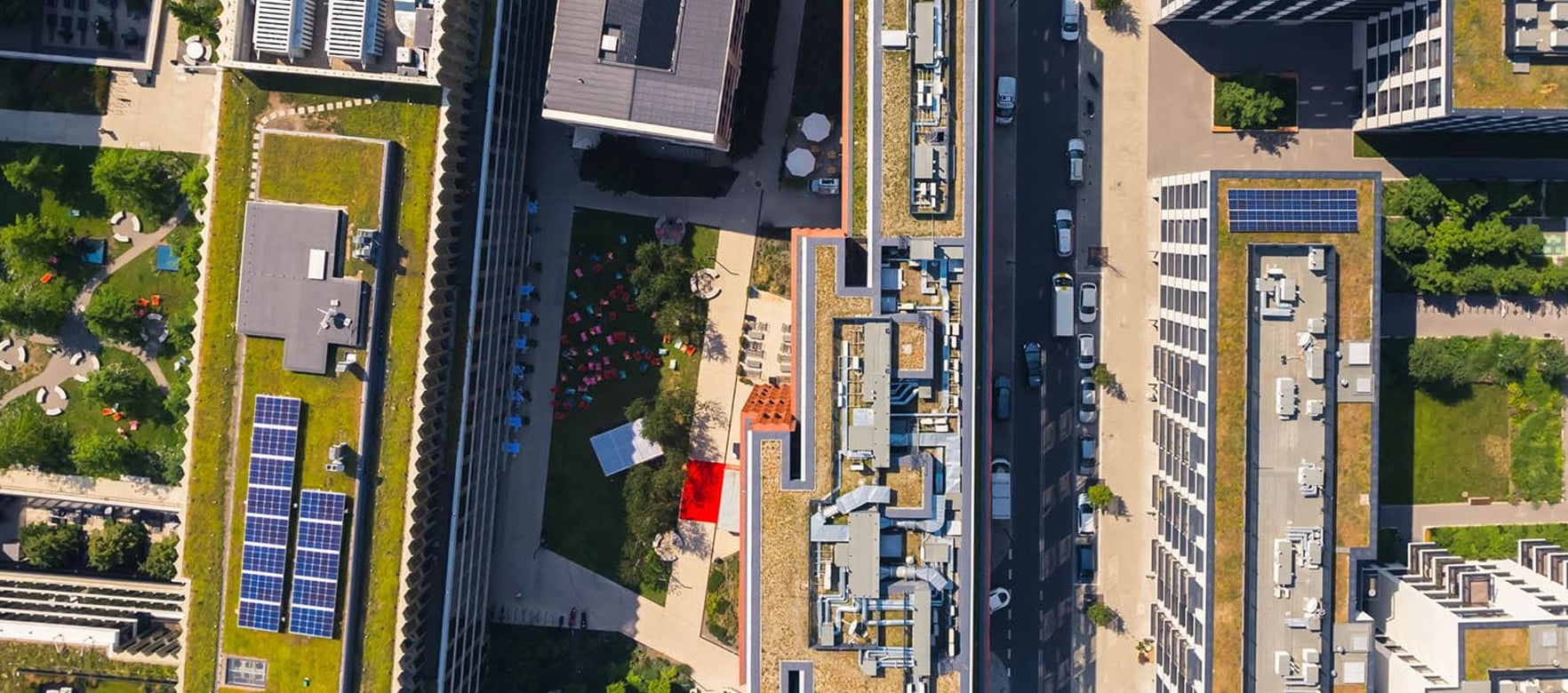
The way we do business is changing. We are challenged by immediate and medium-term social, environmental, and economic concerns. In recognizing that structural shifts are necessary, impact investing has arisen as a potentially powerful vehicle for change. Impact investing combines a desire for financial returns with the express intention to generate positive social and environmental outcomes. By focusing capital on real estate projects that target social and environmental goals, impact investing in commercial real estate (CRE) has the potential to shape the future of sustainable and inclusive development. Repurposing and repositioning real estate across the US, Europe, and APAC is not only a profitable investment opportunity but also an invitation to create social and environmental change – because impact investing works for the good of the investor and the broader community.
Real Estate and Impact Investing
Real estate, with its inherent social and environmental significance, offers immense potential for impact investing. Since it’s at the heart of how and where we live, real estate offers influence far beyond a physical building. It encompasses community and has the potential to enhance the quality of life by shaping the environment in which we live, work and play. Investors can address critical societal challenges by strategically investing in three areas of real estate that drive positive change and offer real opportunities for environmental and social impact, including:
Sustainable Development: The real estate sector accounts for 38% of global greenhouse gas emissions. Impact investors can target buildings to be redeveloped. 80% of the buildings that will exist in 2050 are already built1 therefore there is a growing demand for buildings to be redeveloped to hit increasingly stringent environmental legislation. Promoting energy efficiency, integrating renewable energy provision, and sustainable building practices will greatly reduce emissions and create more environmentally friendly communities. Community Revitalization: There are communities that do not currently have access to the real estate they need. Impact investments can focus on improving access to shopping, leisure, and community amenities, breathing new life into underserved neighborhoods. Community revitalization investments foster social cohesion, increase employment opportunities, and drive economic growth. Affordable Housing: Investing in high-quality, affordable housing addresses the pressing issue of housing affordability and supports improved living standards. Impact investments can span across various housing tenures, including social, affordable, market, rented, ownership, and shared ownership, ensuring inclusivity within communities.
Overcoming Challenges and Maximizing Impact
Though it is not without challenges, impact investing offers a transformative approach to align profit with purpose.
Fortunately, the outlook looks good for impact investing. A 2022 study by the Global Impact Investing Network2 estimates the global impact investing marketing at circa $1.2 trillion and that figure is expected to grow as shifting demographics and values of investors continue to evolve. Generation X, Millennials, and Generation Z, for example, exhibit a higher demand for investments that align with their social and environmental values.
As money and assets pass from the baby boomers to younger generations, an estimated $84 trillion will be entrusted to them by 2045. This wealth transfer is a significant driving force behind the growing momentum of impact investing, signaling a shift towards a more conscious and responsible approach to wealth management.
Striking a balance and conducting thorough due diligence is key to ensuring investments align with both social and financial goals. Measurement and reporting challenges also require standardized frameworks to accurately assess the impact and prevent greenwashing.
Channeling capital into real estate projects, that drive positive change, is the catalyst for sustainable development, equitable communities, and a healthier planet. Impact investing is gaining momentum and offers a very real chance to address both the physical issues real estate is facing and the need to deliver a more sustainable and inclusive way of life.
AUTHOR
- Andrew Phipps, Global Head of Sustainability Thought Leadership London, United Kingdom